2026/09/02 00:08:45
Choosing between a European type and an American type prefabricated substation affects installation time, safety, maintenance, fault response, land use, and total ownership cost. The right choice depends on the distribution voltage, transformer arrangement, protection scheme, environmental conditions, and local electrical code.
For buyers comparing suppliers, a Prefabricated Substation Manufacturer should provide more than a catalog rating. The purchasing team needs a clear comparison of internal layout, transformer accessibility, enclosure protection, operating stability, maintenance requirements, and long-term service support. Juhonkia helps users evaluate these factors through a practical engineering perspective rather than relying only on the name of the substation type.
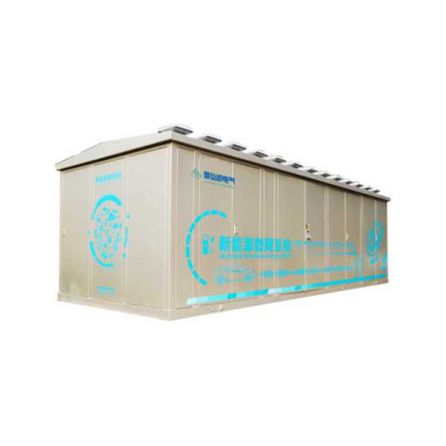
A European type prefabricated substation normally integrates the medium voltage switchgear, transformer, and low voltage switchgear into separate compartments within one compact enclosure. The transformer is generally protected by a dedicated room or metal enclosure, while the high voltage and low voltage sections are separated for operational safety.
This structure makes the European type attractive where land is expensive or where the substation must be placed near buildings, factories, shopping centers, or public infrastructure. However, the compact arrangement requires careful heat dissipation, cable routing, and maintenance space planning.
An American type prefabricated substation usually uses a transformer as the central outdoor unit. High voltage switching equipment and low voltage distribution equipment are arranged around the transformer or placed in adjacent compartments. The transformer is often more visible and easier to access from the outside.
This arrangement is widely used in North American utility distribution and in large outdoor sites. It can provide convenient access to the transformer, but it may require more outdoor space and stronger protection against impact, flooding, animals, and unauthorized access.
European type and American type are useful purchasing terms, but they do not represent one identical design in every country. Actual products can be customized with different transformers, switchgear, protection relays, cable interfaces, cooling methods, and control systems.
Before placing an order, the buyer should confirm:
| Parameter | European Type | American Type | |
|---|---|---|---|
| Typical structure | Integrated compact enclosure with separated internal rooms | Outdoor transformer with adjacent or integrated high and low voltage compartments | Choose according to site layout, maintenance access, and safety requirements |
| Common installation environment | Urban distribution, commercial buildings, factories, infrastructure, and renewable energy sites | Utility distribution, residential developments, industrial yards, and outdoor networks | Review space, appearance, access, and local utility practices |
| Transformer position | Usually inside the substation enclosure | Usually in a dedicated outdoor tank or compartment | Outdoor exposure and replacement method are different |
| Medium voltage range | Often configured for 6 kV, 10 kV, 20 kV, or 35 kV systems | Commonly configured for North American medium voltage distribution levels | Voltage must be confirmed against the actual grid |
| Transformer capacity | Commonly customized from small distribution ratings to several MVA | Commonly customized from small pad-mounted ratings to larger utility requirements | Load profile and future expansion determine the correct rating |
| Cooling method | Natural ventilation, forced ventilation, or liquid cooling depending on design | Commonly oil immersed with natural cooling, with other options available | Cooling affects noise, temperature rise, service life, and maintenance |
| High voltage switching | Load break switch, ring main unit, vacuum circuit breaker, or other configured equipment | Fused switch, load break switch, vacuum switch, or utility-specific equipment | Protection coordination and operating method are critical |
| Low voltage arrangement | Integrated low voltage cabinet with meters, breakers, busbars, and outgoing feeders | Low voltage cabinet or panel connected to the transformer secondary | Check feeder quantity, breaker frame size, and future spare capacity |
| Typical enclosure protection | Often designed to IP23, IP33, IP43, IP54, or higher according to the environment | Often designed for outdoor weather protection and utility access requirements | Confirm the tested enclosure rating rather than accepting a general label |
| Maintenance access | Compartment doors provide access to switchgear and transformer areas | External access to transformer and separate equipment compartments is common | Consider safe working distance and replacement clearance |
| Footprint | Usually compact for the combined equipment function | Can require more open space around the transformer and access sides | Measure the complete service zone, not only the equipment outline |
| Noise control | Enclosure design can reduce perceived transformer noise | Outdoor transformer noise may be more noticeable near occupied areas | Request guaranteed sound levels if the substation is near people |
| Expansion | Expansion may require a larger enclosure or additional modular section | Additional transformer or feeder units can sometimes be added more independently | Plan future load growth before selecting the initial package |
A substation should not be selected by transformer capacity alone. The medium voltage switchgear, busbar, cable terminals, circuit breakers, fuses, and low voltage equipment must all match the expected operating and fault conditions.
For example, a high-capacity transformer connected to undersized low voltage busbars can create a bottleneck. A switchgear unit with an unsuitable interrupting rating can create a serious safety risk even if the transformer itself is correctly rated.
In daily operation, buyers usually care about whether the substation supplies stable power, limits unplanned outages, and remains safe during changing loads. Both types can provide reliable service when correctly designed, but their field performance depends on ventilation, transformer quality, switchgear selection, cable termination, grounding, and commissioning.
A European type unit can perform well in dense sites because the enclosure protects internal equipment from rain, dust, and accidental contact. At the same time, poor ventilation or blocked air passages can cause excessive internal temperature. The design should therefore include adequate heat transfer calculations, temperature monitoring, and access for cleaning.
An American type unit can provide strong outdoor distribution performance and convenient transformer servicing. Because the transformer is more exposed, the buyer should evaluate enclosure sealing, tank corrosion protection, impact resistance, drainage, animal protection, and protection against unauthorized operation.
A prefabricated substation does not normally have a battery that determines its basic power delivery life. When a project includes protection relays, remote terminal units, communication systems, automatic transfer equipment, emergency lighting, or backup control power, a battery and charger may be installed as an auxiliary system.
For a purchasing team, the important questions are whether the auxiliary battery is included, what backup duration is guaranteed, how the battery is ventilated, and how replacement can be completed safely. If no battery-backed control system is required, the transformer and switchgear reliability should be evaluated separately from battery life.
European type substations often provide organized access to separate high voltage, transformer, and low voltage compartments. This can make routine inspection more structured, especially where the site has limited space. However, technicians need sufficient door opening space and safe clearance around the enclosure.
American type substations often make transformer inspection and replacement more direct. A maintenance team may be able to isolate and service the transformer without entering a compact internal room. However, the site usually needs enough clear space for lifting equipment, cable work, and safe operation around multiple access sides.
In both designs, a practical maintenance plan should include:
The main disadvantages include:
The main disadvantages include:
When land is limited, the European type may be more practical because several functions are integrated into a compact package. The buyer should still reserve space for door opening, cable bending radius, ventilation, fire separation, and maintenance work.
When the project has a large outdoor yard and easy access for lifting equipment, the American type can provide a practical service arrangement. The installation plan should include drainage, vehicle protection, fencing, safe operating zones, and clear access for transformer replacement.
Different loads create different demands. A factory with large motors may require attention to starting current and voltage drop. A data center may prioritize redundancy, power quality, and fast protection coordination. A solar or battery energy storage project may require bidirectional power flow, harmonic evaluation, and communication with a plant controller.
Temperature, humidity, dust, salt spray, altitude, solar radiation, flooding, and seismic activity can significantly affect service life. A standard indoor or mild-climate enclosure may not be appropriate for a coastal industrial site or a desert solar plant.
The specification should address:
A lower quotation may not include commissioning, relay setting, spare parts, training, remote monitoring, warranty response, or transformer oil testing. The purchasing group should compare the complete supply scope and ask the Prefabricated Substation Manufacturer to identify every excluded item.
This information prevents a common purchasing error: selecting a standard package first and trying to adapt the project around it later.
Every supplier should receive the same specification and should return comparable data. The technical team can then evaluate the actual equipment rather than comparing different scopes under similar product names.
Factory acceptance testing should verify that the assembled package matches the approved drawings. Site acceptance testing should then confirm correct installation, cable connections, grounding, relay settings, interlocks, and communication.
Useful acceptance checks include:
Choose a European type prefabricated substation when the project has limited land, a strong need for enclosed equipment, strict appearance requirements, or a preference for integrated medium voltage and low voltage distribution. It is often a good fit for:
Choose an American type prefabricated substation when the site has sufficient outdoor space, the local utility follows North American distribution practices, and transformer access is a major maintenance priority. It is often a good fit for:
Neither type is universally better. The European type generally offers a compact, protected, and integrated arrangement, while the American type generally offers accessible outdoor transformer service and familiarity in North American utility networks. Both can achieve stable and long-lasting operation when the transformer, switchgear, protection, enclosure, and installation method are correctly matched.
Purchasing teams should avoid choosing only by price or external appearance. A sound decision should include electrical compatibility, environmental protection, maintenance access, auxiliary power performance, spare parts, commissioning, and future expansion. Requesting a detailed technical proposal from an experienced Prefabricated Substation Manufacturer can reduce design changes and prevent hidden lifecycle costs.
Juhonkia can support project evaluation by helping buyers compare European and American type configurations according to site conditions, grid requirements, operating practices, and long-term service goals. The most suitable substation is the one that provides dependable power, safe maintenance, practical installation, and predictable ownership cost throughout its service life.