For a Low Voltage Switchgear Manufacturer, the most important question is not which model is most popular, but which structure provides the right balance of safety, capacity, maintainability, installation cost, and long term reliability for a specific project. GGD, GCS, and MNS low voltage switchgear are all widely used in power distribution systems, but they are not interchangeable.
This comparison is designed for electrical contractors, consultants, industrial users, property developers, system integrators, and purchasing teams that need to select equipment based on actual operating conditions rather than catalog terminology.
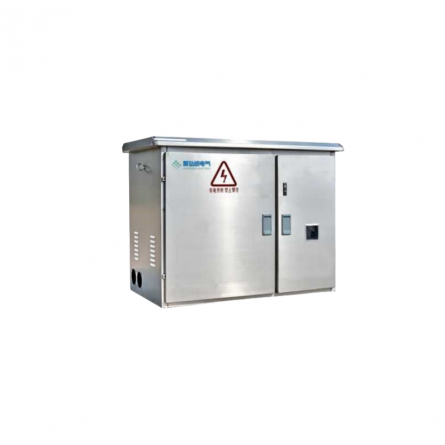
The main difference is the internal structure and maintenance method
GGD uses a fixed cabinet structure for simple and economical distribution
GGD is a fixed type low voltage distribution cabinet. Its incoming, outgoing, and functional components are installed inside a stationary enclosure. To replace or inspect a major component, technicians normally need to isolate the relevant circuit and open the cabinet.
- Structure: Fixed installation.
- Typical purpose: Main distribution, transformer outgoing distribution, and general power distribution.
- Operating method: Circuit breakers and switches remain in a fixed position.
- Maintenance approach: Direct inspection inside the cabinet after power isolation.
- Main advantage: Low purchase cost and relatively simple construction.
- Main limitation: Longer maintenance interruption compared with withdrawable systems.
GCS uses withdrawable functional units for faster replacement
GCS is a withdrawable low voltage switchgear system. Its outgoing circuits are assembled as functional units that can be withdrawn from the cabinet. This arrangement can reduce repair time and improve the flexibility of circuit management.
- Structure: Withdrawable or partially withdrawable functional units.
- Typical purpose: Industrial plants, commercial buildings, infrastructure, and distribution rooms with several outgoing feeders.
- Operating method: Units can normally be moved between connected, test, and disconnected positions, depending on the design.
- Maintenance approach: A faulty unit can often be isolated and replaced more quickly.
- Main advantage: Better maintainability and reduced downtime.
- Main limitation: Higher cost and greater mechanical complexity than a fixed cabinet.
MNS uses a modular withdrawable system with high configuration flexibility
MNS is a modular low voltage switchgear platform commonly selected for demanding industrial and commercial applications. It typically uses standardized compartments, withdrawable units, separated functional spaces, and a broad range of control and protection arrangements.
- Structure: Modular withdrawable design with separated compartments.
- Typical purpose: Large industrial plants, data centers, transportation systems, energy facilities, and high continuity applications.
- Operating method: Functional units may support connected, test, and isolated positions.
- Maintenance approach: Individual feeders and motor control units can generally be serviced with limited impact on other circuits.
- Main advantage: Strong modularity, maintainability, and expansion capability.
- Main limitation: Higher initial investment and stricter requirements for design, assembly, and service.
In practical terms, GGD focuses on economical fixed distribution, GCS focuses on withdrawable distribution with moderate flexibility, and MNS focuses on modularity, continuity, and refined maintenance management.
The core parameter comparison shows where each system fits
Compare the basic technical parameters before comparing the purchase price
The following values are common engineering ranges rather than universal specifications. Actual ratings must be confirmed against the selected manufacturer design, circuit breaker model, busbar arrangement, enclosure form, and project short circuit level.
| Parameter |
GGD |
GCS |
MNS |
| Basic cabinet type |
Fixed distribution cabinet |
Withdrawable low voltage switchgear |
Modular withdrawable low voltage switchgear |
| Common rated insulation voltage |
Up to approximately 1000 V |
Up to approximately 1000 V |
Up to approximately 1000 V |
| Common rated operational voltage |
380 V, 400 V, 415 V, or 690 V depending on design |
380 V, 400 V, 415 V, or 690 V depending on design |
380 V, 400 V, 415 V, or 690 V depending on design |
| Typical incoming current range |
Approximately 400 A to 6300 A |
Approximately 400 A to 6300 A |
Approximately 400 A to 6300 A or higher by project design |
| Typical outgoing feeder current |
Approximately 16 A to 630 A or higher |
Approximately 16 A to 630 A or higher |
Approximately 16 A to 630 A or higher |
| Short time withstand capability |
Commonly 30 kA to 80 kA for one second, depending on design |
Commonly 50 kA to 100 kA for one second, depending on design |
Commonly 50 kA to 100 kA for one second, depending on design |
| Functional unit movement |
Generally not applicable |
Available for many outgoing units |
Highly developed modular withdrawal system |
| Compartment separation |
Basic or project-specific separation |
More structured separation between units and busbars |
Multiple internal separation forms are commonly available |
| Expansion flexibility |
Limited after delivery |
Moderate to high, depending on spare space |
High when the cabinet system is planned with spare compartments |
| Maintenance interruption |
Usually higher |
Usually lower |
Usually lowest for properly designed selective maintenance |
| Initial equipment cost |
Low |
Medium |
Medium to high |
| Design and assembly complexity |
Low to medium |
Medium |
High |
Short circuit performance must be checked as a complete assembly
Purchasers should not select switchgear only by the advertised current rating. Short circuit withstand depends on the busbar system, supports, enclosure, protective devices, internal connections, and verified assembly performance.
- Check the prospective short circuit current at the installation point.
- Confirm the short time withstand current and peak withstand current.
- Review the main circuit breaker interrupting capacity.
- Verify the coordination between incoming and outgoing protection.
- Request assembly test documents when the project has a high fault level.
- Confirm whether the stated rating applies to the complete cabinet or only to an individual device.
IP protection and internal separation affect real operating safety
IP protection describes resistance to the entry of solid objects and water. It does not by itself prove that a cabinet offers complete protection against internal arcing or unsafe maintenance conditions.
- Use a higher external IP rating in dusty, humid, or outdoor-adjacent locations.
- Consider internal separation when maintenance personnel must work near energized busbars.
- Check cable entry design, gland plates, ventilation, and condensation control.
- Confirm the required form of separation for the project specification.
- Ask how the manufacturer manages heat dissipation when the cabinet has a high IP rating.
The actual operating experience is different for each cabinet type
GGD provides stable service when the load profile is predictable
In normal operation, GGD can provide reliable service for lighting, general power, pumps, fans, and other fixed feeders. Its simple structure means there are fewer moving mechanisms to inspect or adjust.
- Stability: Good when the cabinet is correctly rated and the load is not frequently modified.
- Maintenance: Straightforward, but access normally requires power isolation and internal work.
- Downtime: Potentially longer when a major breaker or feeder component fails.
- Heat management: Usually manageable because the internal layout is relatively simple.
- Service life: Often long when busbar joints are correctly tightened and thermal conditions are controlled.
GGD is especially practical when the distribution room has sufficient space for planned shutdowns and when the cost of a withdrawable system cannot be justified by the operating schedule.
GCS reduces repair time but requires better mechanical discipline
GCS can improve maintenance efficiency because a functional unit may be isolated, withdrawn, inspected, and replaced without dismantling the entire cabinet. This benefit is valuable in factories and commercial facilities where a feeder failure can interrupt production or essential services.
- Stability: Good when the guide rails, contacts, interlocks, and plug-in connections are correctly maintained.
- Maintenance: Faster than fixed cabinets for many feeder faults.
- Downtime: Lower when spare functional units are kept on site.
- Mechanical requirements: Higher because withdrawal mechanisms and contact positions must remain correctly adjusted.
- Service life: Strong when operating cycles, contact wear, and torque requirements are properly managed.
The main practical lesson is that GCS does not eliminate maintenance. It changes maintenance from extensive cabinet access to more regular inspection of moving parts and plug-in contacts.
MNS provides the best operational flexibility when continuity is critical
MNS is often chosen when the user needs multiple feeder types, frequent circuit changes, motor control, intelligent monitoring, and selective maintenance. Its modular layout can support organized replacement and future expansion.
- Stability: Very good when the assembly, temperature rise, and protective coordination are properly verified.
- Maintenance: Efficient because individual units can normally be isolated and serviced separately.
- Downtime: Potentially very low when spare units and bypass procedures are planned.
- Configuration: Suitable for motor starters, variable frequency drive feeders, capacitor banks, power feeders, and control units.
- Service life: Long, but dependent on contact condition, mechanical operation, thermal loading, and spare part availability.
However, the benefits of MNS depend strongly on the quality of engineering and assembly. A poorly configured modular cabinet can lose the reliability advantage that justifies its higher cost.
Battery life is not normally a switchgear rating
GGD, GCS, and MNS are not battery products, so battery life is not a direct comparison parameter. The term may become relevant when the switchgear includes a control power supply, trip circuit, communication gateway, emergency lighting system, or a low voltage DC system.
- Check the control voltage, such as 24 V DC, 110 V DC, or 220 V DC.
- Confirm whether the battery and charger are integrated or supplied separately.
- Estimate autonomy under actual relay, communication, and trip coil loads.
- Ask for the expected battery replacement interval and maintenance procedure.
- Verify that protection remains functional during loss of the main AC supply.
For the switchgear itself, the more useful service life indicators are electrical endurance, mechanical endurance, contact temperature, busbar joint stability, insulation condition, and the availability of replacement components.
The purchase decision should account for the complete project cost
GGD usually has the lowest initial investment
- Lower cabinet and mechanism cost.
- Simple installation and commissioning.
- Lower training requirements for maintenance personnel.
- Broad availability of common breakers and accessories.
- Higher possible shutdown cost when a feeder needs repair.
- Less convenient future expansion after the cabinet is installed.
GGD is financially attractive for ordinary distribution systems where circuit changes are infrequent and a short planned shutdown is acceptable.
GCS balances investment and maintainability
- Higher purchase price than fixed GGD cabinets.
- Lower interruption cost during many feeder repairs.
- Improved feeder replacement and testing efficiency.
- Possible reduction in spare shutdown equipment requirements.
- Higher need for inspection of guide mechanisms and plug-in contacts.
- More demanding transport, positioning, and commissioning procedures.
GCS often gives the strongest value for medium and large facilities that need better maintenance efficiency but do not require the full modular complexity of a premium MNS system.
MNS can provide the lowest total cost in high continuity applications
- Highest initial investment in many project configurations.
- More engineering time for layout, protection coordination, and functional unit selection.
- More expensive spare units and specialized components.
- Lower operational losses when downtime has a high financial impact.
- Better support for standardization across many feeders.
- Strong potential for expansion, monitoring, and selective maintenance.
The correct comparison is therefore not only cabinet price. A purchasing team should calculate equipment cost, installation cost, testing cost, planned outage cost, unplanned outage cost, spare parts, technician labor, energy losses, and future expansion cost.
The advantages and disadvantages can be summarized clearly
GGD is best when simplicity and low cost are the priority
- Advantages:
- Low initial cost.
- Simple structure.
- Easy procurement for standard distribution applications.
- Convenient for fixed feeder arrangements.
- Generally simple to operate.
- Disadvantages:
- More difficult to replace a feeder without interruption.
- Limited flexibility for frequent load changes.
- Lower maintainability during continuous production.
- Expansion may require additional cabinet sections.
- Internal access requires careful isolation and safety procedures.
GCS is best when maintenance speed matters
- Advantages:
- Withdrawable feeder units.
- Shorter replacement time for many faults.
- Better separation of functional circuits.
- Moderate expansion capability.
- Suitable for many industrial and commercial applications.
- Disadvantages:
- Higher cost than fixed GGD.
- More moving components to inspect.
- Incorrect unit positioning can create operational or safety risks.
- Spare functional units may be needed for the best downtime performance.
- Requires more disciplined maintenance procedures.
MNS is best when modularity and continuity are essential
- Advantages:
- High modularity.
- Efficient feeder isolation and replacement.
- Strong support for motor control and automation.
- Good internal separation options.
- High expansion and standardization potential.
- Suitable for critical infrastructure and demanding industrial facilities.
- Disadvantages:
- Higher initial and lifecycle management cost.
- More complex engineering and assembly.
- Greater dependence on qualified service personnel.
- Replacement units and accessories may require careful specification.
- Improper thermal design can reduce reliability despite the advanced structure.
The right product depends on the purchasing group and operating environment
Choose GGD for standard distribution and cost controlled projects
GGD is suitable for the following purchasing groups:
- Small and medium commercial buildings.
- Residential and public building distribution rooms.
- Standard transformer outgoing distribution.
- Warehouses and workshops with stable loads.
- Projects with planned maintenance shutdowns.
- Users that prioritize low acquisition cost and simple operation.
GGD should be reconsidered when the facility operates continuously, has high downtime losses, or expects frequent feeder replacement and expansion.
Choose GCS for industrial facilities with moderate continuity requirements
GCS is suitable for the following purchasing groups:
- Manufacturing plants.
- Commercial complexes with multiple outgoing feeders.
- Water treatment and utility facilities.
- Infrastructure projects with several feeder circuits.
- Facilities where a feeder must be replaced quickly.
- Users that need better maintainability without the highest modular system cost.
GCS is often a practical middle choice when the buyer wants a measurable maintenance advantage but must keep the investment within a controlled budget.
Choose MNS for critical loads and advanced power management
MNS is suitable for the following purchasing groups:
- Data centers and communication facilities.
- Large factories with continuous production.
- Petrochemical, mining, and process industries.
- Airports, rail systems, hospitals, and other critical infrastructure.
- Facilities with extensive motor control and automation.
- Users that require strong expansion and standardized feeder modules.
MNS is most effective when the owner has qualified maintenance staff, a documented spare parts strategy, and a clear requirement for high availability.
The technical review should follow a disciplined purchasing process
Start with the electrical and environmental conditions
- Record the system voltage, frequency, earthing arrangement, and distribution topology.
- Calculate the maximum demand current and future load growth.
- Confirm the prospective short circuit current.
- Define the incoming and outgoing breaker types.
- List motor feeders, capacitor banks, variable frequency drives, and sensitive electronic loads.
- Check ambient temperature, altitude, humidity, dust, corrosion, and ventilation.
- Define the required IP rating and internal separation.
This information prevents the common mistake of selecting a cabinet based only on nominal current and external dimensions.
Review the assembly documents instead of relying only on product names
- General arrangement drawing.
- Single line diagram.
- Component list and brand information.
- Busbar material, size, and plating information.
- Short circuit withstand data.
- Temperature rise verification.
- Internal separation form.
- Protection and control wiring diagram.
- Routine test report.
- Factory acceptance test procedure.
- Installation and maintenance manual.
The designation GGD, GCS, or MNS describes a product family or structural concept. It does not replace the need to verify the complete assembly and its actual components.
Check long term support before signing the purchase order
- Confirm the availability of breakers, contactors, relays, auxiliary contacts, and plug-in connectors.
- Ask whether identical functional units can be supplied several years later.
- Clarify the warranty scope and response time.
- Request recommended inspection intervals.
- Confirm torque values and maintenance tools.
- Review the supplier's experience with similar operating environments.
- Ask for training or commissioning support when the system is complex.
For GCS and MNS, long term compatibility of withdrawable units and accessories can be just as important as the original cabinet price.
The final selection can be made with a practical decision rule
Select GGD when the project values simplicity over rapid maintenance
Choose GGD when the load is stable, the distribution system is not frequently modified, the budget is restricted, and planned shutdowns are acceptable. It is the most direct option for conventional fixed distribution.
Select GCS when the project needs a balance between cost and uptime
Choose GCS when the plant or building has multiple feeders, maintenance time matters, and the owner wants withdrawable functionality without selecting the most complex modular platform. It is often the balanced option for general industrial distribution.
Select MNS when downtime and future flexibility have high financial value
Choose MNS when the facility requires high continuity, modular feeder management, advanced motor control, strong internal separation, and future expansion. Its additional cost is easier to justify when an outage can cause major production, safety, or service losses.
In conclusion, GGD is generally the economical fixed solution, GCS is the practical withdrawable solution, and MNS is the high flexibility solution for demanding applications. A reliable Low Voltage Switchgear Manufacturer should help the buyer compare verified parameters, operating conditions, lifecycle cost, maintenance requirements, and spare parts support instead of recommending a model based only on price.
Juhonkia can support project teams in reviewing cabinet structure, current ratings, busbar design, protection coordination, internal separation, environmental requirements, and delivery documentation so that the selected low voltage switchgear matches the real application.