2026/07/28 11:31:54
Power transmission and distribution systems connect power generation facilities with industrial plants, commercial buildings, public infrastructure and residential users. A complete system must safely change voltage levels, control power flow, isolate faults and maintain a stable electricity supply under changing loads.
For utilities, EPC contractors and industrial project owners, selecting individual electrical products is only one part of the procurement process. Equipment voltage, rated current, short-circuit capacity, insulation method, protection configuration, installation environment and communication requirements must also work together as one coordinated system.
Juhonkia supplies power transmission and distribution equipment covering power transformers, gas-insulated switchgear, ring main units, medium-voltage switchgear, metal-clad switchgear, pole-mounted circuit breakers, prefabricated substations and low-voltage switchgear. These products support transmission, primary distribution and final power delivery projects.
Electricity is normally generated at a power plant, wind farm, solar facility or another generation source. A transformer raises the voltage so electricity can be transmitted over long distances with lower losses. At regional and local substations, the voltage is reduced before power enters distribution networks.
Switchgear and circuit breakers control and protect the system at each stage. When a short circuit, overload or another abnormal condition occurs, protection devices isolate the affected section before the fault causes wider equipment damage or power interruption.
The distribution network then delivers electricity through feeders, substations, transformers and switching equipment to the final user. Because each stage affects the next, transformers, breakers, switchgear and monitoring systems must be selected as coordinated components rather than unrelated products.
Power transformers increase or decrease voltage according to the requirements of the grid. Transformer selection depends on rated capacity, primary and secondary voltage, vector group, impedance, cooling method, insulation level, losses and installation conditions.
Before requesting a quotation, buyers should provide:
Rated capacity
Primary and secondary voltage
Frequency
Vector group
Tap-changing requirements
Cooling method
Indoor or outdoor installation
Required standards and testing
Ambient temperature and altitude
A transformer should be selected together with the upstream and downstream protection equipment. Incorrect coordination can lead to unnecessary tripping, inadequate fault protection or higher project costs.
A ring main unit is commonly used in medium-voltage distribution networks where compact installation, sectional isolation and continuity of supply are important.
Typical applications include:
Urban distribution networks
Commercial buildings
Industrial parks
Renewable energy projects
Metro and railway systems
Underground distribution rooms
Residential developments
Juhonkia’s product portfolio includes ring main units using different insulation media and configurations, allowing the equipment to be adapted to grid parameters, available installation space and environmental requirements.
Medium-voltage switchgear controls incoming power, outgoing feeders, transformers, motors and other electrical loads. Metal-clad designs separate major components into grounded compartments to improve operational safety and maintenance management.
Important selection data includes:
Rated voltage
Rated current
Short-time withstand current
Peak withstand current
Internal arc requirements
Busbar configuration
Circuit-breaker type
Protection relay
Metering requirements
Cable entry direction
Panel dimensions
Buyers should also specify whether the system requires remote operation, fault recording, energy metering or connection to an existing supervisory platform.
Pole-mounted circuit breakers are used in overhead distribution networks to interrupt fault currents and isolate affected feeder sections.
Selection should consider the system voltage, fault-current level, protection logic, operating mechanism, communication protocol, outdoor protection level and local climate. For automated networks, remote control and fault indication can help operators locate problems and restore unaffected sections more quickly.
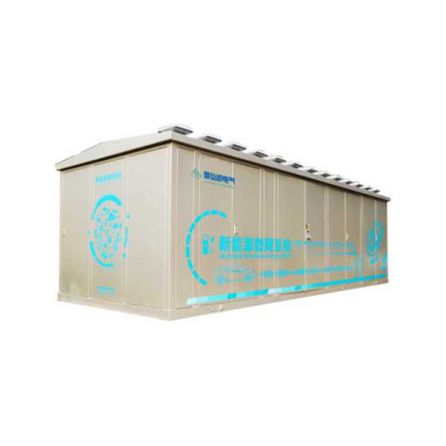
A prefabricated substation combines medium-voltage equipment, transformers and low-voltage distribution equipment within a factory-assembled enclosure.
Compared with installing each part separately on site, a prefabricated system can simplify site coordination and reduce field assembly work. It is suitable for industrial parks, renewable energy facilities, commercial developments, infrastructure projects and temporary or space-limited power systems.
The buyer should define:
Incoming voltage
Transformer capacity
Low-voltage output
Number of feeders
Protection configuration
Enclosure material
Ventilation or cooling
Fire-protection requirements
Cable entry and exit
Available installation footprint
Low-voltage switchgear distributes power from the transformer to equipment, building systems and final loads. It may include incoming panels, feeder panels, capacitor compensation, motor control and automatic transfer functions.
Correct coordination between medium-voltage protection, transformer capacity and low-voltage feeders is necessary to maintain system reliability and avoid oversized or undersized equipment.
Modern power transmission and distribution projects increasingly require operating data rather than simple mechanical switching.
Juhonkia states that its equipment can be configured with IoT sensors for collecting temperature, partial-discharge and load-current information. Data can be connected to the user’s power-monitoring platform for condition monitoring and fault warning. Remote-control, fault-recording and energy-metering modules are also available as customization options.
For buyers, the monitoring specification should identify:
Data points to be collected
Communication protocol
Connection interface
Remote-control permissions
Alarm thresholds
Data-storage requirements
Integration with SCADA or other platforms
Cybersecurity requirements
These details should be confirmed before production because communication architecture affects secondary wiring, control components and factory testing.
Wind and solar projects require transformers, switchgear and substations that can manage variable generation, feeder protection and grid connection. The equipment layout should be selected according to generation capacity, collection voltage, grid interconnection requirements and site conditions.
Metro projects often have limited equipment-room space and strict requirements for reliability, fire safety and remote monitoring. Compact dimensions, cable routing, protection coordination and maintenance access should therefore be reviewed together.
Juhonkia identifies wind power, metro projects and industrial parks among the applications supported by its transmission and distribution portfolio.
Industrial parks may contain production lines, motors, transformers and loads with different operating characteristics. Buyers should provide load schedules, expansion plans, power-quality requirements and critical-load information before equipment selection.
Utility projects usually require compliance with local grid specifications, standardized interfaces, protection coordination and complete factory documentation. Product approval requirements should be identified at the quotation stage rather than after manufacturing begins.
Standard catalogue equipment may not match every grid, site or enclosure requirement. Juhonkia lists customization across voltage levels from 6 kV to 220 kV, with options for insulation medium, monitoring functions and enclosure dimensions. The company also describes a process covering requirement communication, solution design, sample production, mass production, delivery and after-sales support.
Customization may include:
Voltage and current ratings
SF₆, air-insulated or alternative insulation arrangements
Busbar and feeder configuration
Protection and control components
Remote monitoring
Fault recording
Energy metering
Enclosure dimensions
Cable entry direction
Branding and nameplates
Project documentation
To develop a suitable proposal, the supplier should receive the single-line diagram, technical specification, load data, environmental conditions, available space and required delivery schedule.
Power equipment must be tested before shipment because defects may not be practical to correct after installation.
Juhonkia states that its quality process includes incoming-material inspection, insulation-resistance testing, mechanical-operation testing, factory final testing and working-condition simulation. The company also presents CNAS laboratory accreditation, ISO 9001 and ISO 14001 management-system certifications, along with grid-access qualifications.
Depending on the equipment type and project, buyers may request:
Routine test reports
Type-test references
Material inspection records
Insulation test results
Mechanical operation records
Wiring diagrams
General arrangement drawings
Foundation drawings
Protection settings
Packing lists
Installation manuals
Maintenance instructions
Required documents and witness points should be included in the purchase specification.