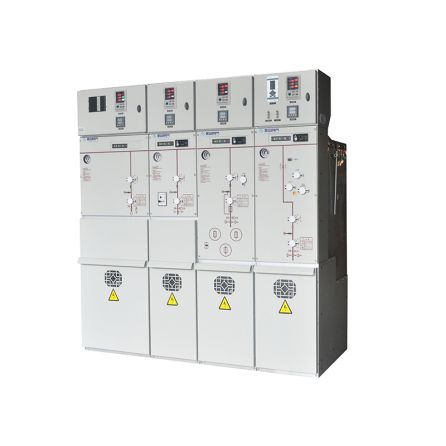
SF6, SF6-Free or Air-Insulated RMU: Which One Should You Choose?
2026/07/28 11:37:06
Share:
Selecting a ring main unit is no longer only a question of rated voltage, current and short-circuit capacity. Utilities, EPC contractors and industrial project owners must also consider the insulation medium, installation footprint, environmental regulations, maintenance strategy and expected service life.
SF6-insulated, SF6-free gas-insulated and air-insulated RMUs can all provide switching, isolation and protection in medium-voltage distribution networks. However, they use different insulation technologies and suit different project conditions.
There is no single RMU type that is best for every project. The right choice depends on where the equipment will be installed, which regulations apply and how the distribution system will be operated over its complete lifecycle.
What Is the Main Difference?
The primary difference is the medium used to insulate live components.
An SF6-insulated RMU uses sulfur hexafluoride gas inside a sealed metal enclosure. SF6 has strong dielectric properties, allowing manufacturers to reduce the distance between energized parts and produce compact equipment.
An SF6-free gas-insulated RMU maintains a sealed and compact structure but replaces SF6 with dry air, nitrogen, clean air or another environmentally preferable medium. Vacuum interrupters are commonly used for current interruption. Commercial SF6-free systems using dry air and vacuum technology are already available for medium-voltage distribution.
An air-insulated RMU uses atmospheric air as its primary insulation medium. Conventional air-insulated equipment normally requires greater electrical clearance, although modern designs can still provide relatively compact modular configurations.
Quick Comparison
Selection Factor
SF6-Insulated RMU
SF6-Free Gas-Insulated RMU
Air-Insulated RMU
Insulation medium
SF6 gas
Dry air, clean air, nitrogen or another SF6-free medium
Atmospheric air
Typical footprint
Very compact
Compact and often close to traditional GIS dimensions
Generally larger
Environmental impact
Requires SF6 lifecycle management
Avoids SF6 and related emissions
No insulating gas management
Protection from surroundings
Primary circuit is normally sealed
Primary circuit is normally sealed
More dependent on enclosure and site environment
Current interruption
Load-break switch, vacuum circuit breaker or other design
Commonly vacuum interruption
Commonly vacuum circuit breaker or air-insulated switch
Maintenance focus
Gas pressure, seals, mechanisms and secondary systems
Mechanisms, vacuum interrupters and secondary systems
Insulators, clearances, contamination and mechanisms
Regulatory outlook
Increasingly restricted in some markets
Suitable for projects moving away from fluorinated gases
Suitable where installation space and environment permit
Common project fit
Existing specifications and compact installations where SF6 is permitted
New utilities, urban networks, renewables and regulated markets
Indoor substations and projects with sufficient space
The table provides a general comparison. The final decision must be based on the manufacturer’s tested design, applicable standards and the project specification.
When Does an SF6 RMU Still Make Sense?
SF6 RMUs have a long operating history in medium-voltage networks. Their compact dimensions make them suitable for underground substations, urban distribution rooms, prefabricated substations and other locations where space is restricted.
A sealed SF6 enclosure also protects the primary circuit from dust, humidity, condensation and pollution. Gas-insulated equipment can therefore be suitable for difficult environments where conventional air insulation would require more space or more frequent inspection.
An SF6 RMU may still be considered when:
The local utility specification explicitly requires an approved SF6 model.
The project is outside a market restricting new SF6 equipment.
Compatibility with an existing SF6 installation is important.
The available equipment room has strict dimensional limitations.
The operator already has established SF6 handling procedures.
The selected product has the required utility approval and type-test documentation.
However, the procurement decision must include more than the initial equipment price. Buyers should examine gas leakage limits, pressure monitoring, end-of-life recovery, technician training and local reporting obligations.
SF6 is being progressively restricted because it is a fluorinated greenhouse gas. The European Union now prohibits putting new medium-voltage switchgear using fluorinated greenhouse gases into operation at up to and including 24kV from January 1, 2026, subject to specified derogations. The prohibition extends to equipment above 24kV and up to 52kV from January 1, 2030.
For projects with long development schedules, a design that is acceptable when specified may face different requirements by the commissioning date. Regulatory review should therefore take place during equipment selection rather than immediately before delivery.
Why Choose an SF6-Free Gas-Insulated RMU?
An SF6-free gas-insulated RMU aims to retain the compact, enclosed construction of traditional gas-insulated equipment without using SF6.
Juhonkia’s GSR6-12 SF6-free system, for example, uses dry gas as the insulation medium and vacuum technology for interruption. Its primary circuit is housed inside a welded gas enclosure, providing protection against external moisture and contamination while avoiding SF6.
An SF6-free gas-insulated RMU is particularly suitable when:
The project is located in the European Union or another market reducing fluorinated-gas use.
The owner has corporate carbon-reduction requirements.
A compact footprint is still necessary.
The installation is exposed to humidity, dust or pollution.
The project has a service life extending beyond future regulatory deadlines.
The operator wants to avoid SF6 recovery and reporting requirements.
Environmental performance is part of the tender evaluation.
Dry-air and vacuum-based products can provide a zero-GWP insulation approach while retaining a sealed RMU structure.
The buyer should not assume that every product described as “eco-friendly” uses the same technology. Ask the supplier to identify:
The exact insulation medium;
Its global warming potential;
Whether fluorinated gases are present anywhere in the equipment;
Rated filling pressure;
Leakage-rate requirements;
Interruption technology;
Type-test standards;
Expected service life;
End-of-life procedure.
This is especially important when tender documents require equipment to be completely free of SF6 or all fluorinated gases.
When Is an Air-Insulated RMU More Practical?
Air-insulated equipment removes the need for a pressurized insulating-gas compartment. This can simplify inspection and eliminate gas-pressure monitoring, recovery and disposal requirements.
An air-insulated RMU may be a suitable choice when:
The substation has sufficient installation space.
The equipment is installed in a clean and controlled indoor environment.
Straightforward visual inspection is preferred.
The purchaser wants to avoid any insulating-gas system.
Local technicians are familiar with air-insulated switchgear.
The project requires a flexible panel arrangement.
Future extension or component access is an important consideration.
Air-insulated switchgear is commonly used in industrial facilities and primary or secondary distribution systems. Vacuum circuit breakers can be used to interrupt fault current while air provides the main insulation between energized parts.
Its main limitation is usually space. Larger phase-to-phase and phase-to-earth clearances may increase cabinet dimensions and the required electrical room area.
Environmental exposure also requires attention. Dust, salt, humidity, condensation, insects and conductive contamination can affect insulation performance if the enclosure and maintenance plan are not suitable for the site.
Do not compare only the RMU purchase price. A larger air-insulated system may require additional building space, cable trench work or ventilation. Conversely, a simple indoor installation may avoid the lifecycle requirements associated with sealed gas equipment.
Sealed Air-Insulated and Conventional AIS Are Not the Same
The term “air-insulated” can describe different product structures.
A conventional AIS design uses ambient air within the switchgear enclosure and generally has larger electrical clearances. A sealed-air design may enclose the primary circuit in a protected chamber using air at atmospheric or slightly elevated pressure.
Therefore, the buyer should verify whether the offered product is:
Conventional ambient-air switchgear;
Sealed atmospheric-air switchgear;
Pressurized dry-air gas-insulated switchgear;
Solid-insulated switchgear;
A hybrid design combining several insulation methods.
This distinction affects cabinet dimensions, environmental resistance, maintenance and tender compliance.
Compare the Electrical Ratings First
The insulation medium should never be selected before confirming the basic electrical requirements.
IEC 62271-200 applies to AC metal-enclosed switchgear and controlgear above 1kV and up to and including 52kV for indoor and outdoor installations. It covers assemblies that may include air-insulated or fluid-filled compartments.
For any RMU type, confirm:
Rated voltage;
Rated frequency;
Rated busbar current;
Rated feeder current;
Short-time withstand current;
Rated peak withstand current;
Power-frequency withstand voltage;
Lightning impulse withstand voltage;
Internal arc classification;
Protection degree;
Load-break switch or circuit-breaker configuration;
Mechanical and electrical endurance.
A compact SF6-free RMU is not a suitable replacement if it cannot meet the required short-circuit level. Likewise, a high-rated air-insulated panel may be unnecessary for a small transformer feeder.
Consider the Installation Environment
Site conditions can change the suitability of each insulation technology.
Provide the RMU manufacturer with:
Maximum and minimum ambient temperature;
Installation altitude;
Relative humidity;
Condensation risk;
Pollution level;
Coastal or salt-fog exposure;
Indoor or outdoor installation;
Flooding or water-ingress risk;
Seismic requirements;
Available room dimensions;
Ventilation conditions.
High altitude reduces the insulating performance of air. Conventional air-insulated equipment may therefore require larger clearances or correction factors. Sealed gas or dry-air designs must also be specifically approved for the project altitude.
Juhonkia’s SF6-free GSR6-12 product information, for example, specifies operating limits for temperature, humidity and altitude and requires separate consultation for harsher conditions.
Review Protection and Network Configuration
The RMU must match the function of each feeder.
Typical modules include:
Cable incoming and outgoing switches;
Transformer protection using a switch-fuse combination;
Vacuum circuit-breaker protection;
Bus-section modules;
Metering modules;
Voltage transformer modules;
Cable-riser modules;
Direct busbar connections.
For transformer protection, compare the transformer rating, inrush current and fault level before choosing between a fuse-switch module and a circuit-breaker module.
For renewable energy, industrial plants and intelligent distribution networks, buyers may also require:
Numerical protection relays;
Motorized mechanisms;
Remote opening and closing;
Fault passage indicators;
Current and voltage sensors;
Energy metering;
SCADA communication;
IEC 61850 or other communication protocols;
Temperature and partial-discharge monitoring.
Juhonkia’s portfolio includes SF6-insulated, SF6-free, solid-insulated and atmospheric-air-insulated RMU configurations, allowing the insulation technology and feeder arrangement to be selected according to project requirements.
Evaluate Lifecycle Cost, Not Only Purchase Price
The lowest equipment quotation may not produce the lowest total project cost.
A lifecycle comparison should include:
Equipment purchase price;
Electrical-room and civil-work costs;
Installation and commissioning;
Gas handling or monitoring;
Planned inspection;
Spare parts;
Technician training;
Expected outage time;
Environmental reporting;
End-of-life recovery;
Future regulatory compliance.
SF6 equipment may have a competitive initial cost and compact footprint but introduce gas-management obligations. SF6-free GIS may have a higher initial price in some markets but reduce environmental and regulatory exposure. Air-insulated equipment may be economical where space is available, but the larger footprint and environmental maintenance requirements must be considered.
The result depends on the project rather than the insulation medium alone.
Which RMU Should You Choose?
Choose an SF6-insulated RMU when the project specification and local regulations still permit it, the footprint is highly restricted and compatibility with an existing SF6 network is essential.
Choose an SF6-free gas-insulated RMU when you require compact dimensions, a sealed primary circuit and a solution aligned with current environmental regulations and long-term sustainability goals.
Choose an air-insulated RMU when sufficient space is available, the installation environment is controlled and the operator prefers accessible, gas-free equipment.
For many new European, renewable energy and long-lifecycle infrastructure projects, SF6-free technology is becoming the more practical specification. For existing networks and other markets, the final choice still depends on utility approval, available space, service capability and total lifecycle cost.
Before requesting a quotation, send the manufacturer your single-line diagram, voltage, rated current, short-circuit level, feeder configuration, installation conditions, communication requirements and applicable standards. This allows the supplier to compare the three technologies against the actual project rather than recommending an RMU only from a catalogue.